
Ba'al — pronounced bah-AHL — was the major storm and fertility god of the ancient Canaanites, Phoenicians, and other peoples of the Levant.
The name itself isn't really a personal name, it means "Lord," "Master," or "Owner" in Northwest Semitic languages. So there were many local Ba'als — Ba'al of Tyre, Ba'al of Peor, Ba'al Hadad, etc. — but when people just say "Ba'al" they usually mean Ba'al Hadad.
Who he was:
- God of storm, rain, thunder, and fertility.** He was believed to ride the clouds, send rain that made crops grow, and defeat Mot (death/drought) and Yam (the sea) each year. His annual death and return explained the seasons.
- Depicted** as a young, muscular warrior wearing a horned helmet, often holding a thunderbolt or club, sometimes standing on a bull — his sacred animal symbolizing strength.
- Chief rival to El** — the elder father-god — and later became more prominent than El in many cities. His temples were usually on high places, hilltops and mountain peaks like Mount Zaphon.
- In the Bible**, Ba'al is the main pagan god the prophets of Israel confront. Worship of Ba'al involved altars, sacred poles (Asherah), and offerings for rain and harvest. The famous showdown is Elijah vs. the prophets of Ba'al on Mount Carmel.
In short: for the ancient Near East, Ba'al was the powerful lord of the storm who brought life-giving rain — and for Israel's prophets, the chief false god they warned against following instead of Yahweh.
Ba'al Hadad
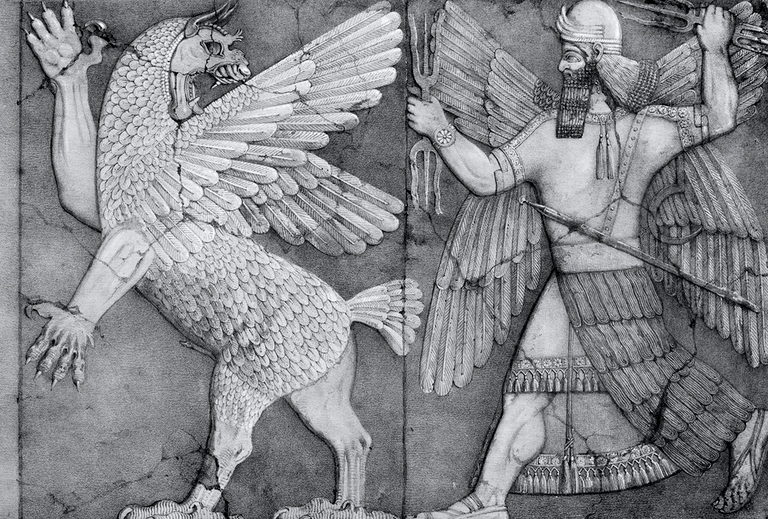
Ba'al Topic References:
- World History Encyclopedia: https://www.worldhistory.org/baal/
- The Archaeologist - Worship of Baal in the Ancient Levant: https://www.thearchaeologist.org/blog/the-worship-of-baal-in-the-ancient-levant
- American Bible Society - Canaanite Gods and Goddesses: https://www.americanbible.org/engage/bible-resources/articles/canaanite-gods-and-goddesses/
- Oxford Reference - BAAL WORSHIP: https://www.oxfordreference.com/viewbydoi/10.1093/acref/9780199730049.013.0368