
Yahweh is El, not Ba'al or Yahshua (Jesus). Jesus is Lord, not Ba'al, (Yahshua is master).

Image: The idol in the ending of the movie, He-Man (2026). What the body is up against.
The state religion of ancient Babylon is being observed today. Bel-Marduk was their main god. This reflects the choice of the world. The world does Bel worship, and Ba'al worship; Ba'al/Asherah/Inanna. They worship the sun, moon and stars (host of heaven) and the gods are symbols of the 'host of heaven'. This is done namely with fertility rites (Tammuz/Inanna), festivals, sacrifices and idol worship. This is the layer under the world we see around is. World leaders who don't know Yahweh, and His son, put their trust in idols and devil worship. The world is being deceived.The gods over the nations (na8tions) are being used for the worship of Lucifer. Lucifer wants our worship by aligning to her, not Him - by feast, rituals, observances and use of symbols that honor the Sumerian, Babylonian/Assyrian, and Greek/Roman gods. This is 'anti-messiah', and opposite to Yahweh and His word.
Some of the churches have chosen Ba'al and Inanna, Ba'al/Asherah over Yahweh and His son. This is what the world worships, and is that mixture in the Churches. The following are some helpful notes. I got help with ai for some of the technical data, but I work and speak off of revelation from Yah. He is praised and true. He reveals things to us in a loving, king and powerful way.
Evil aligned people will relate to and be associated to any of the ancient cultures to their liking. They can find a 'Bel' or a 'Ba'al' in any part of the world - there are many 'lords' (Ba'al), but only one Maker of the heavens and the earth, who is Yah (יה), Psalms (Tehillim) 68:4.
Who is B'al?
The revelation Yah has given, has made known Ba'al worship in the Churches and this work shows it. Here is what the books say, and are in agreement. Ba'al is an ancient Northwest Semitic title and honorific meaning "lord," "owner," or "master" that came to specifically designate a major storm and fertility deity worshiped across the ancient Near East, particularly by the Canaanites and Phoenicians. Because ancient Levantine agriculture depended entirely on seasonal rains rather than river irrigation, he was considered essential for life and crop survival.
- Mythology: In Canaanite texts discovered at Ugarit (modern-day Syria), Ba'al is depicted as a youthful, warrior god. The "Ba'al Cycle" details his epic battles to secure supreme kingship among the gods, including defeating Yam (the god of the sea and chaos) and Mot (the god of death and sterility).
- Family: He was often viewed as the son of Dagon (or El, the chief creator god) and the consort or son of Asherah.
Biblical Context
In the Hebrew Bible, Ba'al is frequently condemned as a false god and a primary rival to Yahweh. Because "Ba'al" functioned as a generic title meaning "lord," local communities often worshipped distinct regional manifestations of him (such as Ba'al-peor or Ba'al-zebub). The confrontation between the prophet Elijah and the prophets of Ba'al on Mount Carmel is one of the most famous biblical narratives addressing this religious rivalry.
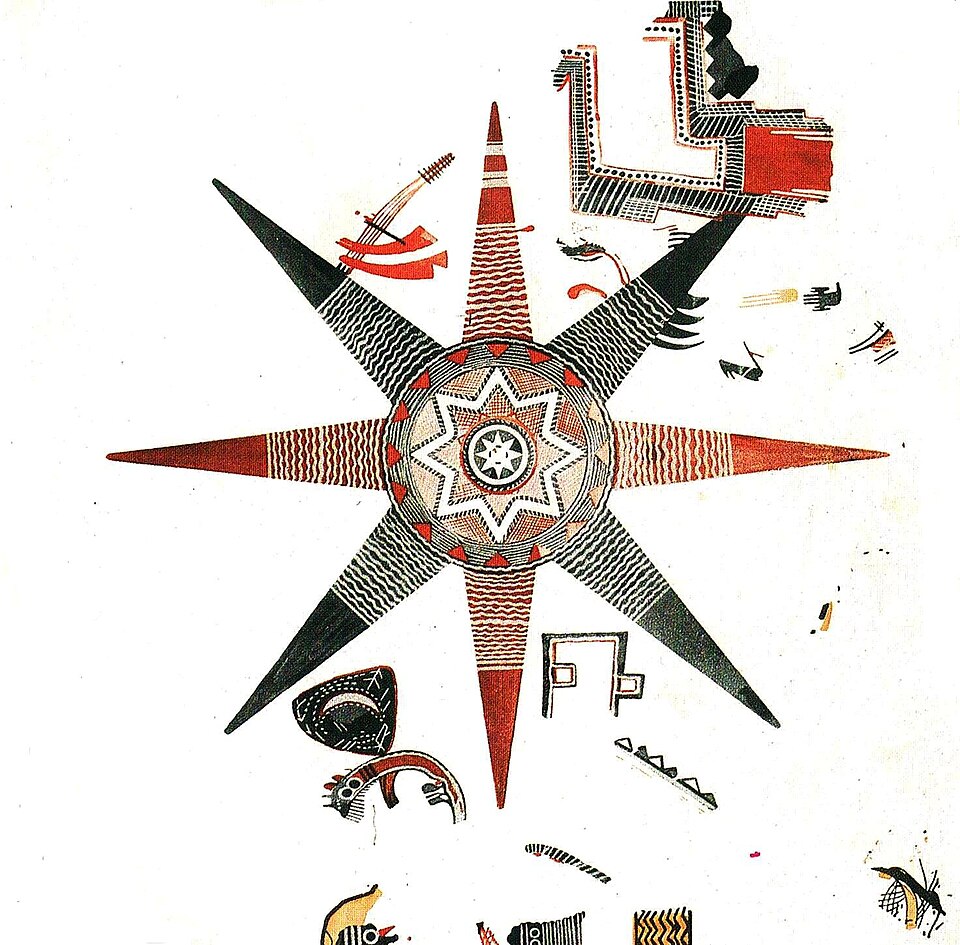
Artifacts from the land of Canaan hide secrets
This item connects to Ba'al, Yahweh revealed the symbols connection.
The Ghassulian star
The Chalcolithic period in the Land of Israel (Circa. 3.500 B.C.E.)
The Ghassulian Star is a famous 6,000-year-old geometric wall painting discovered at the archaeological type-site of Teleilat el-Ghassul in the Jordan Valley. Both the Gobeki Tepe and this site have animals around it and the idol is there with 16 and 888.
The Excavators: The ongoing dig seasons (1929–1938) that led to the discovery were headed by Jesuit fathers Alexis Mallon and Robert Koeppel.
By the time the Canaanites began worshiping Baal, the Ghassulian culture had already been extinct for nearly 2,000 years, yet share the same symbolism, even with the Jesuits who found it. The Ghassulian people did not worship Ba'al, but astral, solar deites and a mother goddess and fertility goddsess. They all support the same idol, because they have ond mind - of anti-messiah as is even seen today. To see more on goddess worship in Israel, see this website: https://tarbuyotolami.com/en/temples-of-the-goddess-culture/
The worship of Ba'al includes his consort and is why the Ghassulian is added; they share same symbols. Tammuz (Dumuzid) is the consort of Inanna, Ishtar, who's star has eight (8) points. This painting also has same symbols seen with Inanna (Ishtar). The glory of Yah reveals it. Both male and female deities are seen with the idol that is in the painting. Below are two examples showing Israel struggle with this problem with Ba'al worship.
Example 1
''And the children of Israel did evil in the sight of Yahweh (the LORD), and served Baalim: 12 And they forsook Yahweh Elohim (the LORD God) of their fathers, which brought them out of the land of Egypt, and followed other gods, of the gods of the people that [were] round about them, and bowed themselves unto them, and provoked Yahweh (the LORD) to anger. 13 And they forsook Yahweh (the LORD), and served Baal and Ashtaroth.' - Shoftim / Judges 2:11-13 (KJV)
Example 2
'For Yahweh of Armies (the LORD of hosts), that planted thee, hath pronounced evil against thee, for the evil of the house of Israel and of the house of Judah, which they have done against themselves to provoke me to anger in offering incense unto Baal.' - YeremeYahu / Jeremiah 11:17 (KJV).
What is Ba'al worship?
Ba'al worship was a prominent religious system centered on the honor, placation, and invocation of the storm and fertility god Ba'al, spanning the Levant, Phoenicia, and the broader ancient Near East from the Bronze Age through the Hellenistic period.
Core Rituals and Practices
- High Places (Bamoth): Worship typically took place on elevated outdoor sites, hills, and mountains believed to bridge the earthly realm and the heavens. These sites often featured sacred standing stones (massebot) and wooden Asherah poles representing the divine feminine consort.
- Agricultural Offerings: Because Ba'al controlled the rain and crops, rituals closely mirrored the agricultural calendar. Worshippers offered the "first fruits" of grain, wine, oil, and livestock to secure agricultural abundance and prevent drought.
- Sacrificial Rites: Rituals included animal sacrifices, and in certain extreme historical contexts or periods of severe crisis among specific Canaanite offshoots (like the Carthaginians, who practiced molk sacrifices derived from these traditions), child sacrifice was occasionally performed, though its exact scale and frequency remain subjects of scholarly debate.
Regional and Household Expressions
- Local Ba'alim: Communities worshipped localized manifestations of the deity tied to specific geographic locations—such as Ba'al-Hermon or Ba'al-Peor—each believed to protect a defined territory or city-state (like Tyre or Sidon).
- Household Devotion: Beyond state temples, common families maintained small household shrines(teraphim, terracotta figurines, and amulets dedicated to Ba'al and associated fertility goddesses like Astarte to safeguard household health and livestock.
Cultural Syncretism
As empires shifted, Ba'al worship adapted and blended with other cultures. The Phoenicians carried the cult across the Mediterranean to colonies like Carthage (where he was venerated as Ba'al Hammon). Later, during the Seleucid period, he was frequently conflated with Zeus (Zeus Olympios or Zeus Megistos) through Hellenistic religious syncretism.
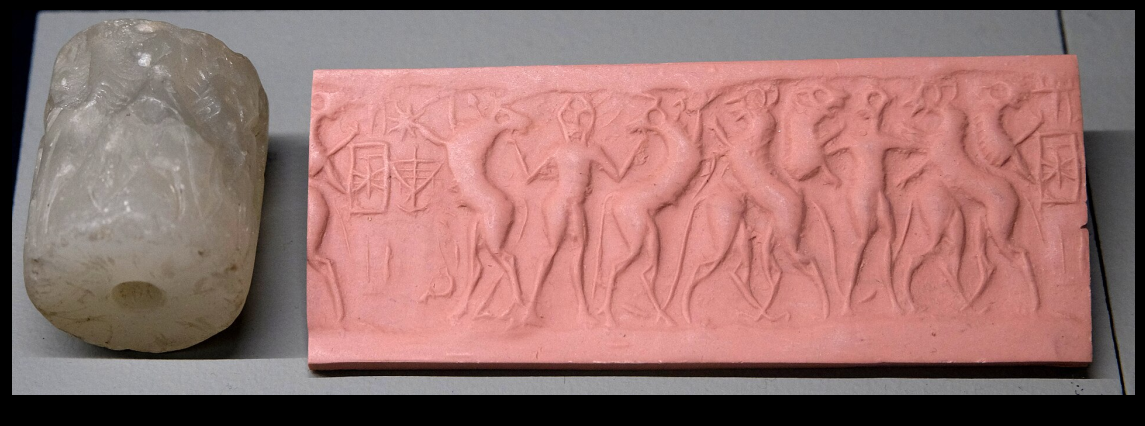 |
| IMAGE: A bull man fighting four quadrupeds. Inscription "Ama-Ushumgal" (𒀭𒂼𒃲𒁔 dama-ušumgal), namesake of the mythical king or shepherd Dumuzi. Early Dynastic II, circa 2600 BC. Royal Museums of Art and History - Brussels. Yahweh in His great love and power, has shown me this is demonic idol worship. More about this image later. Yah is great, the works of His son are true and trusty worthy. |
Marduk is the chief god of Babylon, and film makers celebrate Babylon and its gods. They honor the male deity Bel/Ba'al, female deity Inanna/Ishtar; the sun, moon and stars.
Hip Hop stars, movie stars, political stars, tick tok stars, and church stars - all are seen doing simular 'fertility rites' and honoring the idol, even the goddess worship. Ba'al worship today uses symbols that match The Spider. Men wearing skirts, or cross dressing. Black widow, Vampire colors are used by all, even Nazi colors. I have seen a speaker in Church call someone to the stage, and they have symbols that match The Spider, and/or Nazi colors. It is even common to see them wear the idol on their clothes. They worship Ba'al in the name of Jesus and this is why I know Jesus is not Ba'al. Ba'al is in their hearts, who trust in idols and not Yahweh our Maker.
Bel and Ba'al Connection
Bel and Ba'al are deeply related etymologically and linguistically, but they refer to completely different cultural deities and religious traditions in the ancient Near East. Ba'al (Canaanite religion) and Bel worship (Babylonian religion).
- Linguistic Cognates: Both words mean "Lord", "Master", or "Owner", with Bel coming from the East Semitic (Akkadian/Babylonian) branch and Ba'al coming from the Northwest Semitic (Canaanite/Phoenician/Ugaritic) branch.
Key Differences
| Feature | Bel | Ba'al |
| Region | Mesopotamia (Babylon, Assyria, Palmyra) | The Levant (Canaan, Phoenicia, Ugarit) |
| Primary Deity | Used primarily as a title for Marduk (and earlier, Enlil) | Used primarily as the proper name for Hadad, the storm, rain, and fertility god |
| Cultural Context | Centralized around the massive river-irrigation empire of Babylon | Centralized around agricultural societies heavily dependent on seasonal rainfall |
| Biblical Portrayal | Depicted as the fallen idol of Babylon (e.g., Book of Isaiah, Bel and the Dragon) | Heavily criticized in the Hebrew Bible as a rival false god to Yahweh, famously contested by prophets like Elijah |
Interpertaions of the name Bel.
Bel (derived from the East Semitic word bēlu) simply translates to "Lord" or "Master".
Bel—a title meaning "Lord," most frequently applied to the Babylonian god Marduk (or sometimes Enlil)—comes from older historical interpretations of the myth.
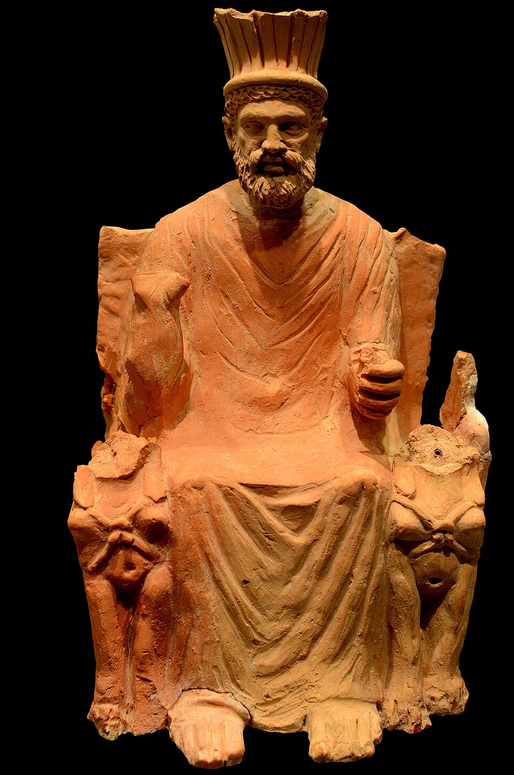
Explanatory Notes of The Scriptures (ISR 1998):
Ba’al: This word it seems, gradually became a proper name. A similar Semitic word derives from the Aryan root Bhal, which means "to shine," according to some. According to W. H. Roscher’s well-known lexicon of mythology, Ba’al (Bel, Belos) was the ancestral and national deity of the Semites, and says that Ba’al was the founder of Babel (Babylon), according to secular history. He is identified with Zeus, Jupiter, Ammon, Asshur, Assur, Kronos, and Bel-Marduk.
Bel and Bal
*bhel-(1)
Proto-Indo-European root meaning "to shine, flash, burn," also "shining white" and forming words for bright colors.
Baal
Origin: A Northwest Semitic word meaning "lord," "master," or "husband".
Usage: A common epithet for many ancient Near Eastern deities, most famously the storm god Hadad.
Used in place names, such as Baal of Tyre.
Often used in the Bible to refer to the Canaanite gods, who were viewed as idols.
> https://en.wikipedia.org/wiki/Baal
Bel
Origin: The East Semitic (Akkadian) form, cognate with Baal, also meaning "lord".
Usage: Specifically associated with the Babylonian god Marduk, particularly in Mesopotamian texts and personal names.
Mentioned in the Bible in reference to Babylonian gods, such as in Jeremiah 50:2.
> https://en.wikipedia.org/wiki/Bel_(mythology)https://en.wikipedia.org/wiki/Bel_(mythology)
Bel and the Dragon
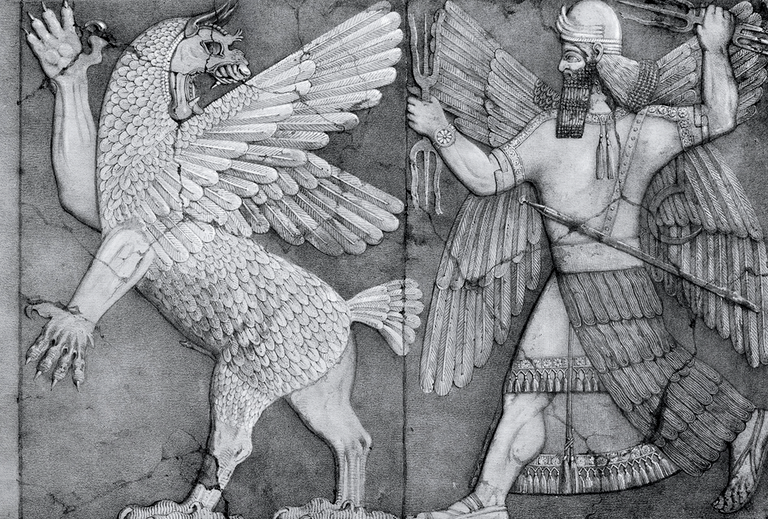
IMAGE: Mesopotamian god Ninurta (with thunderbolts) battles the gryphon-like Anzu; often associated with battle of Marduk vs Tiamat - story from Enūma Eliš. The image depicts Ninurta (on the right) battling Anzû. Modern archaeology more accurately identifies the figure as the warrior god Ninurta (or a protective spirit), but the older literature often linked this cosmic battle motif to Bel/Marduk's legendary triumph over chaos.
Daniel killed the dragon - Daniel 14:23-42
The characters and entities mentioned in the apocryphal text Bel and the Dragon (often counted as Daniel 14) are literary allusions to the ancient Babylonian deities Bel (Marduk) and Tiamat, rather than the literal mythological figures themselves. The narrative uses Daniel to expose the fraudulent nature of the idol by showing that the food supposedly eaten by the god was actually consumed by the priests.
The Mythological Parallel:
In the original Babylonian myth, the god Marduk (Bel) achieves his supreme status by fighting and slaying the chaos dragon Tiamat, famously splitting her open.
(Note: While the dragon in Daniel functions as a literary stand-in for the Tiamat myth, the biblical text presents it simply as a living animal worshipped by the Babylonians, rather than the cosmic goddess of the original myth.)
How to avoid Ba'al worship.
When you recognize the idol, you can stay away from it. This world will use any thing, any name from our faith, to worship the devil - Ba'al worship or other. My conviction is synchronism to the Babylonian (Mesopotamian) gods came by Trinity, Easter, and the number 8. These items belong with the left hand path, not the right.
Example 1: Mike Todd on Easter has a female hanging on a cross. See article here.
Example 2: Church 'sacrifices' a female (in place of Christ of Messiah) named Belle on Easter at Church of the Rock in Winnipeg, Canada. Their Easter musical parody in April 2023 was titled Beauty and the Beaster, and featured Belle on a cross. See article: Church Crucifies Disney Character, Belle, From Beauty and the Beast For Easter Performance. Visit the Church website, and see the idol is there. Below is their website.

Therefore say unto the house of Israel, Thus saith Yahweh Elohim (the Lord GOD); Repent, and turn yourselves from your idols; and turn away your faces from all your abominations. - Ezekiel 14:6